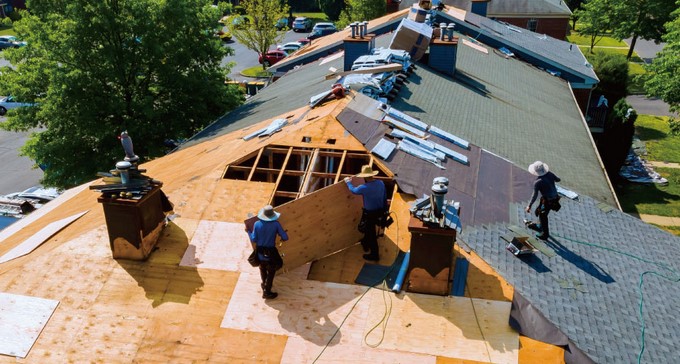
Imagine standing on a 45-degree pitch roof at 7:00 AM, the summer sun already beginning to bake the asphalt shingles beneath your boots. You have 30 squares of roofing to lay before a predicted thunderstorm rolls in at 4:00 PM. If you were reaching into a pouch for individual nails, hand-driving each one, you wouldn’t just be exhausted—anda akan gagal total (you would fail completely). In my ten years of managing high-pressure residential tear-offs, I’ve learned that the difference between a dry house and a flooded living room often comes down to the efficiency of a single specialized consumable: the Roofing Nail Coil.
When we talk about high-speed building envelope protection, we aren’t just talking about swinging hammers faster. We are talking about logistics, mechanical reliability, and the precision of the fastener itself. Integrating the right Roofing Nail Coil into your workflow is the ultimate “force multiplier” in home improvement. It transforms a grueling manual labor task into a streamlined, industrial process.
The Machine Gun of Home Improvement: Why Coils Beat Bulk
Think of a standard box of loose nails like a single-shot musket. It gets the job done eventually, but every reload is a pause in production. A Roofing Nail Coil, by contrast, is like a high-capacity magazine for your pneumatic nail gun. It allows for continuous “suppressive fire” against the clock.
In my early years, I tried to save a few dollars by using bulk nails on a small shed project. By midday, my thumb was bruised, and I had dropped more nails into the grass than I had driven into the plywood. When I finally switched to a coil-fed system, my productivity didn’t just double—it quadrupled. The collated design of a nail coil ensures that you aren’t just driving nails; you are managing a constant flow of production.
Technical Anatomy of a High-Performance Roofing Nail Coil
For the beginner or intermediate roofer, a nail might just look like a piece of pointed wire. However, the engineering behind a Roofing Nail Coil is what prevents shingles from blowing off during a hurricane.
1. Shank Geometry and Withdrawal Resistance
Most coils feature a ring shank or a smooth shank. I always advocate for the ring shank in high-wind zones.
-
The rings act like small barbs, biting into the wood fibers of the OSB or plywood decking.
-
This significantly increases the “pull-through” resistance, ensuring the shingle stays pinned even when the wind tries to lift it.
2. Wire Collated vs. Plastic Collated
Standard Roofing Nail Coils are typically wire-collated.
-
Two thin wires are welded to the shanks to hold the nails in a spiral.
-
As you fire, the gun snips these wires.
-
Pro Tip: Always wear eye protection. Those tiny wire snippets can fly out of the exhaust port at high velocities.
3. Galvanization and Corrosion Resistance
Since these fasteners are part of your exterior infrastructure, they must be “hardened” against the elements.
-
We look for Hot-Dipped Galvanized (HDG) coatings.
-
Electro-galvanized nails are cheaper but have a thinner zinc layer that can fail in salty, coastal environments.
-
If you are working on a high-value asset near the ocean, 304 or 316 Stainless Steel coils are the only way to guarantee a 50-year lifespan.
Precision Logistics: Calibrating the Depth of Drive
The most common mistake I see intermediate roofers make isn’t missing the nail—it’s over-driving or under-driving it. A Roofing Nail Coil is only effective if the pneumatic pressure is perfectly balanced with the shingle density.
-
The Over-Drive Disaster: If your compressor is set too high, the nail head will punch right through the shingle’s fiberglass mat. In the industry, we call this a “blown-through” fastener. It provides zero wind resistance.
-
The Under-Drive Trip: If the nail is “proud” (sticking up), the shingle above it won’t seal properly. This prevents the thermal sealing strip from activating, leading to leaks.
-
Analogy: Think of the nail head like an umbrella. It needs to sit snug against the surface to keep the water out. If you punch a hole in the umbrella, or hold it too high, you’re going to get wet.
Scaling Efficiency: The ROI of Pneumatic Speed
When I consult for smaller contracting firms, I focus on the Labor-to-Material Ratio. While a Roofing Nail Coil costs more per unit than a box of bulk nails, the labor savings are astronomical.
-
Reload Speed: A standard coil holds 120 nails. That’s roughly 20 to 30 shingles per reload.
-
Consistency: Pneumatic guns provide a uniform impact force that human arms simply cannot replicate over an 8-hour shift.
-
Ergonomics: Using a coil-fed gun allows the roofer to keep one hand free to align the shingles precisely along the starter course or the chalk line. This leads to a straighter, more professional aesthetic.
Expert Advice: The “Hidden Warning” for DIYers
Here is an insight from a decade on the ridge: The Temperature Variable.
⚠️ Tips Pro: Peringatan Tersembunyi
Asphalt shingles change their physical properties based on the ambient temperature. On a 95°F day, the shingles become soft and “gooey.” Your Roofing Nail Coil will sink into them like butter. If you don’t adjust your gun’s depth-of-drive adjustment every few hours as the temperature rises, you will accidentally over-drive half the roof. I’ve seen entire warranties voided because a crew didn’t adjust their pressure when the sun came out from behind the clouds.
Maintenance: Keeping the Tool in the Fight
Your coils are only as good as the gun that shoots them.
-
Oiling: Three drops of pneumatic oil in the air inlet every morning is the “blood” of the machine.
-
Clear the Feed: Small pieces of the collation wire can build up in the nosepiece. Clean it out daily to prevent “misfires” that can ruin a shingle.
-
Check the Magazine: If the magazine tray is bent even slightly, the coil won’t spin freely, leading to a jam. Treat your nailer like a precision instrument, not a sledgehammer.
Conclusion: Dominating the Deadline
Construction is a race against the elements. By implementing the Roofing Nail Coil into your infrastructure, you aren’t just fastening shingles; you are optimizing your most valuable asset: Time. You are ensuring that when the clouds turn gray and the wind starts to howl, your building envelope is secured by precision engineering rather than exhausted guesswork.
There is a deep satisfaction in watching a roof go from bare wood to finished slate-gray in a matter of hours. It’s the sound of productivity.
Is your roofing project dragging on longer than expected? It might be time to put down the hammer and pick up the coil.
Are you worried about the learning curve of using a pneumatic nailer? Tell me about your current project—whether it’s a small patch job or a full re-roof—in the comments below. I’ve handled everything from backyard sheds to commercial warehouses, and I’m here to help you dial in your pressure for a perfect finish!