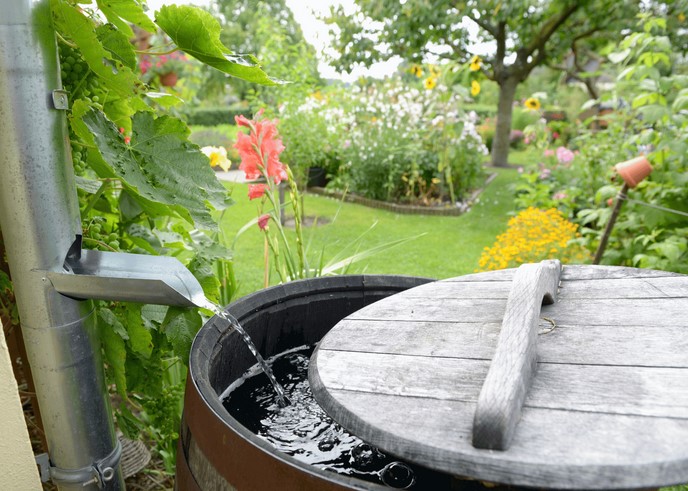
Imagine a sweltering July afternoon. Your garden is parched, the local municipality has just announced a Stage 2 water restriction, and your expensive ornamental shrubs are starting to curl. You walk over to your catchment system, turn the handle, and… nothing. Or worse, a slow, pathetic dribble that wouldn’t quench the thirst of a single tomato plant. All that free water is trapped inside the drum because a $10 component—the Rain Barrel Spigot—has failed or was installed with poor mechanical logic.
In my decade of designing sustainable landscapes and off-grid utility systems, I’ve seen hundreds of rain barrels. Most homeowners focus on the size of the tank or the color of the plastic. But after years of troubleshooting “dry” gardens, I can tell you that the spigot is the heart of the system. If the heart doesn’t pump, the system is just a stagnant mosquito breeder. Mastering the installation and physics of your output valve is the difference between a decorative hobby and a reliable secondary utility.
The Physics of Gravity-Fed Flow: Why Your Spigot Struggles
To understand the Rain Barrel Spigot, you must first understand that you are fighting a battle against low pressure. Unlike your indoor plumbing, which is pressurized by city pumps to about 40–60 PSI, a rain barrel relies entirely on gravity.
For every foot you raise a water barrel off the ground, you only gain about 0.43 PSI. This means that if your barrel is sitting flat on the dirt, the water pressure at the spigot is nearly non-existent.
The Straw Analogy
Think of your rain barrel like a giant soda cup and the spigot like a straw. If you try to drink through a tiny, crimped straw (a low-quality, narrow-bore spigot), you have to work incredibly hard to get any liquid. But if you use a wide boba straw (a full-port ball valve spigot), the liquid flows effortlessly. In a gravity system, you want the “widest straw” possible to maximize the limited pressure you have.
Choosing Your Hardware: Brass vs. Plastic Logistics
When you’re shopping for a Rain Barrel Spigot, you’ll generally see two materials. In my professional experience, this choice dictates the lifespan of your entire sustainability project.
-
Zinc/Plastic Spigots: These often come “free” with DIY kits. They are prone to UV degradation and the handles tend to snap after one icy winter.
-
Heavy-Duty Brass Spigots: This is the professional standard. Brass is corrosion-resistant and has the structural integrity to handle the “torque” of a heavy garden hose being pulled.
-
Quarter-Turn Ball Valves: Always look for a “ball valve” design rather than a “gate valve” (the kind you have to twist multiple times). A ball valve offers a straight-through path for the water, which is critical for maintaining flow in gravity-fed systems.
Tactical Installation: The Art of the Watertight Seal
I’ve crawled inside more 55-gallon drums than I care to admit to fix “mysterious leaks.” The point where the Rain Barrel Spigot meets the barrel wall is the most common failure point in residential water harvesting.
The “Bulkhead” Advantage
Never just screw a spigot into a hole you drilled in plastic. The plastic walls of a drum are too thin to hold threads securely. You must use a Bulkhead Fitting. This is a threaded pipe with a wide flange and a high-grade EPDM or silicone gasket. It “sandwiches” the barrel wall, creating a mechanical seal that won’t wiggle loose.
Positioning for Maximum Yield
I see many beginners install their spigot at the very bottom of the barrel to get every drop of water. This is a mistake. Peringatan Tersembunyi: Every rain barrel accumulates “bio-sludge” or sediment at the bottom. If your spigot is too low, you will constantly clog your valve or your soaker hoses with gunk. Install your spigot about 2 to 3 inches from the bottom to allow a “settling zone” for debris.
Step-by-Step Logistics for the Intermediate DIYer
If you are ready to upgrade your utility access, follow this professional workflow:
-
Drill the Pilot: Use a hole saw bit that matches the outer diameter of your bulkhead fitting. Go slow; high-speed drilling can melt the plastic, leaving a ragged edge that won’t seal.
-
The Fishing Technique: If you don’t have long arms, tie a string to a heavy nut and drop it through the top of the barrel and out the hole. Slide your bulkhead fitting onto the string and “fish” it down to the hole.
-
Gasket Logic: The gasket always goes on the inside of the barrel. The nut on the outside provides the compression.
-
Reverse Threads: Be aware that many bulkhead fittings are left-hand threaded to prevent them from loosening when you screw the spigot into them. Check the markings!
Expert Advice: Scaling Your Flow Rate
Here is an insight that separates a “bucket-filler” from a “garden-irrigator”: Standard garden hoses are the enemy of gravity water.
A 50-foot garden hose creates immense friction loss. Even with a perfect Rain Barrel Spigot, you might find the flow at the end of the hose is disappointing.
Tips Pro: The “Short and Fat” Strategy
Use a high-flow, short-length “utility hose” (usually 5/8″ or 3/4″ diameter) to connect your barrel to your watering can or your garden bed. If you need to run water further away, you must elevate your barrel onto a platform of cinder blocks—at least two feet high—to give the water the “head pressure” it needs to overcome hose friction.
Maintenance: The Winterization Protocol
In my ten years of practice, I’ve replaced more split spigots in April than at any other time of year. If water stays inside a brass Rain Barrel Spigot during a hard freeze, the expanding ice will split the metal like a peanut shell.
-
Drain and Open: Before the first frost, drain the barrel completely.
-
The “Half-Cocked” Valve: Leave the ball valve spigot in a 45-degree open position. If it’s fully closed, water trapped inside the ball mechanism will freeze and crack the valve body. If it’s fully open, it can still trap moisture in the seals. 45 degrees is the safety sweet spot.
Enhancing Reliability: Screens and Overflows
Your Rain Barrel Spigot is only as reliable as the water entering the tank.
-
Debris Screening: Always use a fine mesh screen at the intake. If a single leaf gets through and makes its way to the spigot, it can act as a “flap valve,” randomly cutting off your flow.
-
The Overflow Logistics: Ensure your overflow pipe is larger than your intake. If the barrel overfills and puts pressure on the top seal, it can create a vacuum or a surge that stresses the spigot’s bulkhead connection.
Conclusion: Mastering Your Micro-Utility
Building a sustainable home is about mastering the small details of resource management. The Rain Barrel Spigot might seem like a minor piece of hardware, but it is the interface between your stored resource and your living landscape. By selecting high-quality brass, utilizing bulkhead fittings, and respecting the laws of gravity and sediment, you ensure that your “reliable flow” is there when the heat is on and the taps are dry.
There is a unique satisfaction in turning a handle and watching “captured” water nourish your garden. It’s a closed-loop success story that starts with one well-installed valve.
Is your rain barrel currently sitting on the ground, or have you elevated your system for better pressure? Are you struggling with a leaky connection or a slow drip? Let’s troubleshoot your sustainable water setup in the comments—I’m here to help you get the water moving!