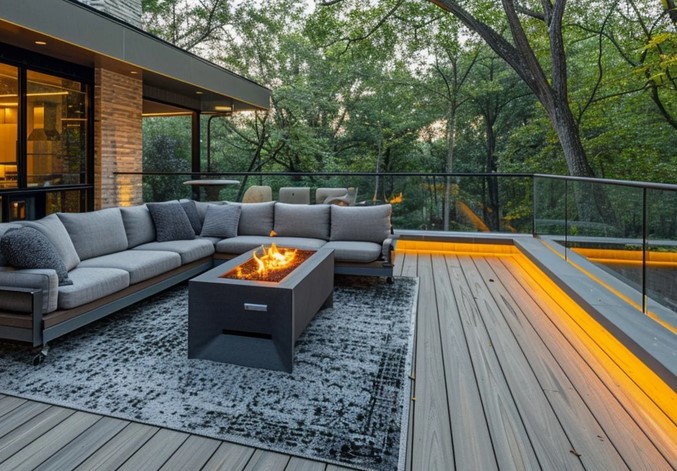
I’ve spent over a decade walking onto sun-drenched patios and windsourced decks, and I’ve noticed a recurring “crime” in exterior design. Homeowners spend thousands on weather-resistant teak furniture and ambient LED lighting, yet the entire space feels like a collection of floating islands. The chairs feel disconnected, the table looks lonely, and the transition from the sliding door to the deck feels jarring.
In my experience, the missing ingredient isn’t another potted plant or a fancy fire pit—it’s the anchor. Specifically, the Outdoor Rug Large. Think of your patio as a stage; without a rug, your furniture is just wandering around without a script. A large-format outdoor rug acts as the “connective tissue” that transforms a cold slab of concrete into a legitimate hospitality zone.
Why Scale Matters: The Psychology of the Large Format
When I consult on residential projects, I often see people make the mistake of buying a rug that is “just enough” to fit under a coffee table. This is what I call the “Postage Stamp Syndrome.” If the rug is too small, it actually makes your outdoor area look cramped and cluttered.
An Outdoor Rug Large serves a psychological purpose: it defines boundaries without building walls. In an open-air environment, your eyes need visual cues to understand where the “lounging zone” ends and the “traffic zone” begins. By choosing a larger footprint—typically an 8×10, 9×12, or even larger—you are telling your guests, “This is the sanctuary.”
The “All Legs On” Rule
One of the most important technical insights I can share is the All Legs On principle. In professional staging, we strive to have every piece of furniture—or at least the front two legs—resting comfortably on the rug.
-
The Benefit: This creates a unified visual weight.
-
The Feel: It prevents that annoying “wobble” when a chair is half-on and half-off the rug, which is a subtle but constant irritant for guests.
Strategic Placement: More Than Just Centering
Placement isn’t just about finding the middle of the deck. It’s about Traffic Flow Engineering. After ten years in the field, I’ve learned that a rug can actually dictate how people move through your home.
1. The Anchored Dining Suite
If you are placing an Outdoor Rug Large under a dining table, you need to account for “chair travel.” This is the distance a chair moves when someone pulls it out to sit down.
Expert Advice: Always measure your table and add at least 24 to 36 inches on all sides. If the chair legs drop off the edge of the rug when someone sits down, the rug is too small. A 9×12 rug is usually the “Goldilocks” size for a standard 6-person dining set.
2. The Modular Lounge Configuration
For sectional sofas, the rug should be the foundation. Instead of centering the rug in the middle of the “U” shape, tuck the rug about 6 to 10 inches under the sofa. This “tucking” technique locks the furniture in place and creates a cozy, “sunken-pit” feel even on a flat surface.
3. The Transitional Threshold
I often use large outdoor rugs to bridge the gap between the indoors and outdoors. By placing a rug near the sliding glass doors, you create a visual “runway” that pulls the eye outward. It tricks the brain into thinking the living room has doubled in size.
Material Science: Choosing the Right “Weave” for Longevity
Not all rugs are created equal. Since we are dealing with high-traffic hospitality zones, the technical specs of the fiber matter more than the pattern. In my early years, I saw too many “outdoor” rugs succumb to mold and UV degradation within a single season.
-
Polypropylene (Olefin): This is the gold standard for an Outdoor Rug Large. It is chemically treated to be UV-resistant and, most importantly, it is hydrophobic. It doesn’t soak up water; it lets it pass through.
-
PET (Recycled Polyester): A fantastic sustainable option. These rugs often feel softer—almost like wool—but are made from recycled plastic bottles. They are incredibly stain-resistant, making them perfect for zones where wine or BBQ sauce might spill.
-
Jute and Sisal (The Natural Trap): While they look beautiful in magazines, I generally advise against natural fibers for uncovered areas. They act like sponges. If you live in a humid climate, a natural fiber rug will become a science experiment of mildew within months.
The Invisible Foundation: Why You Need a Rug Pad
Many beginners think a rug pad is only for indoor comfort. That is a dangerous myth. In the world of home improvement, the rug pad is the “unsung hero” of safety and maintenance.
-
Drainage and Airflow: A quality outdoor rug pad creates a small gap (a “micro-void”) between the rug and the deck. This allows moisture to evaporate, preventing wood rot or stone discoloration.
-
Surface Protection: If you have a composite deck (like Trex), the backing of some rugs can be abrasive. A pad acts as a buffer.
-
The “Trip Factor”: Large rugs can bunch up. A pad keeps the edges crisp and flat, ensuring your summer cocktail party doesn’t end in a trip to the ER.
Pro Tips for Maintenance and “Seasoning”
I always tell my clients that an outdoor rug is an investment, not a disposable item. If you treat it like a piece of equipment, it will last you 5 to 7 years.
-
The Power Wash Secret: Most polypropylene rugs can be cleaned with a mild dish soap and a garden hose. Don’t use a high-pressure power washer at point-blank range, as it can fray the fibers. A gentle “fan” spray is all you need.
-
The Rotation Rule: Just like tires on a car, rotate your Outdoor Rug Large every six months. UV rays are relentless. Even the best “UV-stabilized” rugs will fade slightly over years. Rotating ensures the fading is uniform rather than leaving a “shadow” where the sofa sits.
-
Off-Season Storage: If you live in a climate with snow or heavy winter rains, roll it up. Never fold an outdoor rug. Folding creates permanent creases in the synthetic backing that are nearly impossible to flatten out once the sun hits them again.
Troubleshooting Common Placement Errors
Sometimes, even with the best intentions, a rug placement feels “off.” Here is a quick checklist to diagnose your exterior zone:
| Problem | Likely Cause | Solution |
| Rug keeps moving | No rug pad or slick surface | Install a rubberized outdoor-rated grip pad. |
| Edges are curling | Heat expansion or poor backing | Reverse-roll the rug for 24 hours, then apply heavy planters to the corners. |
| Water pooling | Rug is “clogged” with dirt | Deep clean with a hose to clear the drainage pores in the weave. |
Conclusion: Setting the Stage for Memories
At the end of the day, an Outdoor Rug Large isn’t just a piece of decor; it’s a strategic tool. It softens the acoustics of a noisy backyard, provides a safe place for bare feet, and creates the visual boundaries necessary for true relaxation.
I’ve seen dozens of patios transformed from “unfinished construction projects” to “luxury retreats” simply by adding the right-sized rug. It is the single most cost-effective way to upgrade your exterior hospitality zone without hiring a contractor.
What’s holding you back from defining your space? If you’re struggling with choosing the right dimensions for your specific deck layout, drop a comment or reach out—I’ve likely seen your exact floor plan before and would love to help you anchor your sanctuary.