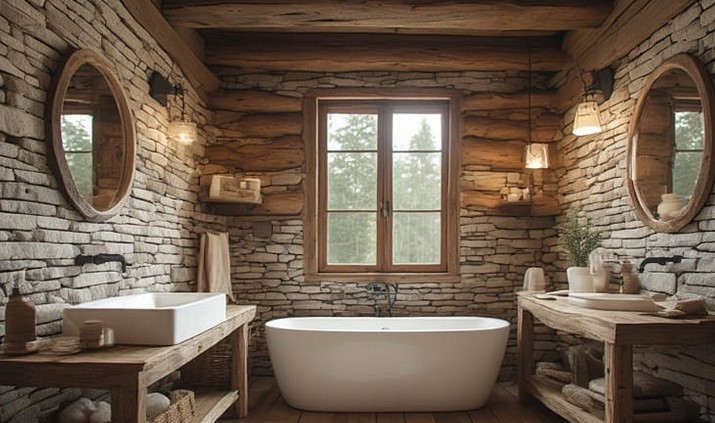
Imagine walking into a sleek, ultra-modern bathroom in the dead of winter. The white marble is cold, the chrome fixtures are clinical, and the lighting is so sharp it feels like an interrogation room. It looks “perfect,” but it feels empty. Now, contrast that with the warmth of reclaimed wood grain, the soft patina of a copper sink, and the tactile comfort of a stone-textured floor. In the high-stakes world of property value, “perfection” is common, but character is a premium asset.
In my decade of tearing down sterile drywall and uncovering the hidden bones of old homes, I’ve realized that a Rustic Bathroom isn’t just a design choice—it’s a branding strategy for your home. We live in an increasingly digital, “smooth” world; humans are naturally starving for texture. By integrating rustic elements, you aren’t just remodeling a room; you are anchoring your home with a sense of history and organic permanence that modern materials simply cannot replicate.
The Soul of the Space: What Defines a Rustic Bathroom?
To many beginners, “rustic” sounds like a polite word for “unfinished” or “shabby.” As an expert who has spent years perfecting the balance between raw and refined, I can tell you it’s the exact opposite. A true Rustic Bathroom is an intentional celebration of natural materials in their most honest state.
It’s about moving away from the “disposable” feel of plastic and veneer and moving toward materials that actually look better as they age. We’re talking about the “wabi-sabi” of home improvement—finding beauty in the knots of the wood, the variations in slate, and the hand-forged irregularities of iron.
The Blue Jeans Analogy
Think of a modern bathroom like a crisp, white tuxedo. It’s stunning, but you’re afraid to touch anything, and the slightest stain ruins it. A Rustic Bathroom is like your favorite pair of high-quality denim jeans. They are rugged, they have a story, and the more “distressed” they get through actual use, the more character and value they gain.
Technical Logistics: Balancing Texture and Moisture
The biggest hurdle in a Rustic Bathroom project is the battle between organic materials and high humidity. In my early years, I saw too many DIYers put raw barn wood in a shower zone, only to find it covered in black mold six months later. To build a rustic asset that lasts, you must master “Material Logistics.”
1. Reclaimed Wood and Vapor Barriers
If you are using reclaimed timber for a vanity or an accent wall, it must be stabilized. I always treat my wood with a high-performance, matte-finish polyurethane or a marine-grade sealer. This locks out the steam while preserving the “dry” look of the wood. Furthermore, your ventilation (CFM rating) must be top-tier to ensure moisture doesn’t sit on these textured surfaces.
2. The Stone Infrastructure
Rustic design often utilizes natural stone like travertine, slate, or river rock. While these look incredible, they are porous.
-
The Sealant Protocol: Unlike ceramic tile, natural stone requires a high-quality impregnating sealer.
-
Slip Resistance: One technical win for rustic design is the “Coefficient of Friction.” The natural cleft of slate provides a built-in anti-slip surface that is far safer than polished porcelain.
Tactical Elements: Engineering the Rustic Aesthetic
When I’m designing a Rustic Bathroom for a client, I focus on three “Anchor Assets” that define the room’s character.
The Live-Edge Vanity
Forget the particle-board cabinets from the big-box stores. A true rustic anchor is a thick slab of live-edge walnut or cedar topped with a vessel sink. This creates a focal point that screams “custom craftsmanship.”
Industrial-Rustic Fusion Hardware
I love using oil-rubbed bronze or “living finish” brass for faucets and towel bars. These materials develop a patina over time. Pairing these with “Edison” style lighting provides a warm, amber glow (around 2700K) that complements the wood tones and creates an instant “spa” atmosphere.
Exposed Structural Elements
If your home has brick hidden behind drywall or wooden ceiling joists, expose them! There is nothing more authentic in a Rustic Bathroom than seeing the actual “bones” of the building. If you don’t have them, adding faux-beams made of lightweight high-density polyurethane is a brilliant “cheat” that provides the visual weight without the structural stress.
Expert Advice: The “High-Low” Strategy
Here is a piece of “insider” knowledge that separates a professional job from a weekend hobby: Don’t go 100% rustic.
If everything in the room is rough, brown, and weathered, the bathroom will end up looking like a dark cave or a literal barn. You need the “High-Low” balance.
Tips Pro: The Contrast Rule
Pair your rugged wood vanity with a crisp, white, modern toilet and a sleek glass shower enclosure. This contrast “pops” the rustic elements and reminds the eye that the room is clean and hygienic. The white porcelain acts as a canvas that makes the wood grain look even more dramatic.
The Weight of the Asset
One technical “gotcha” I always warn intermediate renovators about is floor loading. Rustic materials are heavy. A cast-iron clawfoot tub filled with water, sitting on a floor with a slate tile overlay and a heavy timber vanity, adds significant “dead load” to your floor joists.
-
The Structural Check: Before installing a heavy stone soaking tub, I always head to the crawlspace or the floor below to inspect the joists. You may need to “sister” the joists (adding a second beam alongside the original) to prevent the floor from sagging over time.
Scaling Value: Why It’s a Smart Investment
From a real estate perspective, a Rustic Bathroom is a “high-emotion” room. Buyers today are tired of “flipped” houses that all look the same. A bathroom that feels like a mountain retreat or a historic farmhouse creates an emotional bond with the buyer.
It brands the house as an “architectural find” rather than just another piece of inventory. In my experience, homes with well-executed rustic character often sell faster and for a higher “aesthetic premium” because the design feels irreplaceable.
Maintenance: Keeping the Character, Losing the Grime
Because rustic surfaces have more “nooks and crannies,” your cleaning logistics change.
-
Avoid Harsh Acids: Never use bleach on natural stone or “distressed” metal finishes; it will strip the patina and can pit the stone.
-
pH-Neutral Cleaners: Use specialized stone soaps. For wood elements, a simple microfiber cloth and a mild wood-safe spray are all you need.
-
Grout Management: In rustic designs, we often use wider grout lines. I always recommend using epoxy grout or a “Power Grout.” These are stain-proof and don’t require the constant scrubbing that traditional cement grout demands.
Conclusion: Crafting Your Personal Sanctuary
Building a Rustic Bathroom is about more than just changing a floor or a sink; it’s about reclaiming a sense of nature and tactile history within your own four walls. It’s a project that rewards those who respect the materials and understand the balance between the raw and the refined.
When you sit back and look at the play of light across a textured stone wall or feel the warmth of a wooden countertop, you’ll realize that you haven’t just improved your home—you’ve given it a soul.
Are you ready to swap the clinical white tile for something with a bit more grit and grain? Are you planning to go “Full Cabin” or just add a few rustic accents to a modern space? Let me know your vision or your biggest technical “fear” in the comments—I’ve seen it all and I’m here to help you build it right!