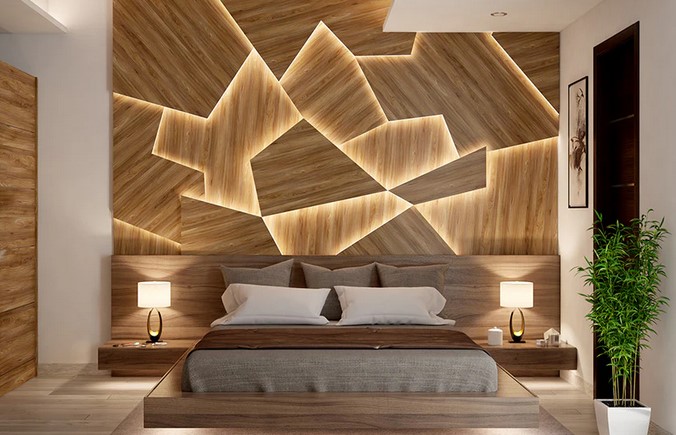
You have spent $5,000 on an Italian-engineered mattress, custom-fitted Egyptian cotton sheets, and state-of-the-art blackout curtains. Yet, you still wake up at 6:00 AM feeling like you just survived a transatlantic flight. You crawl out of bed, flip a switch, and are instantly blinded by a 15-watt overhead LED downlight that floods your retinas with harsh, uncalibrated white light. In that single, jarring fraction of a second, your body’s cortisol levels spike, your natural melatonin production plummets, and your morning executive focus is compromised before you even pour your first cup of coffee.
During my ten-plus years consulting on luxury residential retrofits and high-end home improvements, I have noticed a fascinating, costly blind spot among high-achieving homeowners. They will gladly over-index on structural square footage and high-end furniture, but completely starve their lighting budgets. They treat illumination as a utility—a simple binary choice between “on” and “off.”
But the truth known only to master interior builders is that lighting is a biological architectural material. Strategically engineering your Bedroom Mood Lighting is one of the highest-yielding interior investments you can make, directly impacting both your home’s equity and your personal human capital.
The Circadian Ledger: The Technical Science Behind Mood Lighting
To understand the tangible ROI of light, we have to look past the superficial interior design catalogs and dive straight into human photobiology.
Think of your brain’s internal clock like an old-fashioned primitive sundial. For hundreds of thousands of years, our bodies relied on the slow, golden shifts of the sun to tell us when to hunt, when to digest, and when to enter deep, restorative REM sleep. When you install a poorly placed, cool-white overhead light fixture, it is the equivalent of spinning that sundial manually at midnight. Your brain registers the blue-spectrum light wave and thinks it is 12:00 PM on a clear summer day.
When we design a high-performance Bedroom Mood Lighting scheme, we are intentionally manipulating color temperatures and angles to match our natural ancestral rhythms. By replacing harsh blue light with low-frequency, warm-spectrum tones, we facilitate the body’s natural transition into recovery mode.
From a home improvement perspective, this isn’t just about feeling cozy; it is about building a high-efficiency sleep sanctuary that pays dividends in daily mental clarity and long-term cognitive performance.
Designing the Matrix: Layering Your Bedroom Mood Lighting
A successful lighting ecosystem is never built around a single central fixture. If your bedroom relies solely on a dome light in the center of the ceiling, your design is fundamentally flawed. To achieve true spatial depth and wellness optimization, you must implement a three-tiered architectural layout.
1. Ambient Foundations via Indirect Coves
Ambient light should act like a gentle fog that rolls into the room—omnipresent but without a visible, glaring source.
-
The Technical Setup: Install high-density, dimmable LED tape lights (minimum 120 LEDs per meter to prevent visible hot-spotting) inside a dropped ceiling cove or behind a custom bed headboard valance.
-
The Specification: Ensure the light washes up against the ceiling or back against the wall surface. This indirect bounce diffuses the glare, reducing eye strain and instantly lowering your heart rate.
2. Low-Kelvin Task Lighting for Evening Transitions
Bedside lamps should be highly functional but entirely restricted to the warm end of the color spectrum.
-
The Metric: Look for smart bulbs or fixtures calibrated between 1800K and 2400K (Kelvin). This temperature range mimics the amber, soothing wavelength of candlelight.
-
The Architecture: Mount adjustable wall sconces exactly 24 inches above the mattress surface. This positioning allows you to review executive briefs or read a book without casting long, harsh shadows across your partner’s half of the bed.
3. Safety-First Accent Illumination
The worst thing you can do during a 3:00 AM wake-up call is turn on a bright overhead light to find the bathroom. It instantly resets your sleep cycle.
-
The Fix: Deploy low-voltage, motion-activated LED strips underneath the floating perimeter of your bed frame or nightstands. Calibrate them to turn on at a mere 5% brightness when your feet touch the floor, illuminating your walking path without activating your central nervous system.
Calculating the Tangible ROI of Smart Luminescence
How exactly does a set of dimmers and warm bulbs translate into a financial return on investment? In the competitive home improvement market, “wellness real estate” is fetching a premium.
-
Smart Home Valuation: Properties integrated with automated, circadian-aligned lighting systems see an increased velocity on the market. Buyers are no longer just looking at granite countertops; they are looking for integrated wellness infrastructure.
-
Energy Infrastructure Savings: Transitioning your bedroom to a smart, zoned LED matrix drastically reduces power consumption compared to old-school halogen pots. By utilizing low-wattage accent lines rather than massive overhead groupings, you shave immediate numbers off your monthly operational costs.
-
The Executive Performance Multiplier: If a $2,000 lighting renovation improves your deep sleep efficiency by even 15%, the resulting boost to your daytime productivity, decision-making speed, and emotional regulation yields an invaluable professional return.
Technical Integration: Controls and Automation Logistics
To maximize your system’s human-centric ROI, you cannot rely on manual toggle switches. The modern wellness bedroom requires seamless, automated scenes.
-
Pulse-Width Modulation (PWM) Dimmers: Ensure your smart dimmers utilize high-frequency PWM or forward-phase dimming tech. Cheap dimmers cause invisible micro-flickering in LED bulbs. While your eyes might not register it consciously, your brain does, often leading to mysterious evening headaches and hidden eye fatigue.
-
Automated Ephemeris Programming: Program your smart ecosystem to tie into local astronomical time. As the sun sets outside, your bedroom lights should automatically, imperceptibly dim and shift from a crisp 3000K down to a rich, fire-toned 2000K over a two-hour window. This hands-off logistical automation ensures your body naturally prepares for rest without you ever having to open an app.
Engineering Your Ultimate Sanctuary
Optimizing your home isn’t just about updating aesthetic styles; it is about calibrating your physical environment to support your highest-performing self. Implementing an intentional, multi-layered Bedroom Mood Lighting architecture corrects a critical biological flaw found in most modern homes. By respecting the subtle relationship between light spectrums and human performance, you turn your bedroom into an elite recovery asset that yields measurable personal and structural dividends.
What does your current evening bedroom lighting setup look like? Are you ready to ditch the harsh overhead glare for a more sophisticated, wellness-focused design? Let me know your thoughts in the comments below, and let’s troubleshoot your space together!