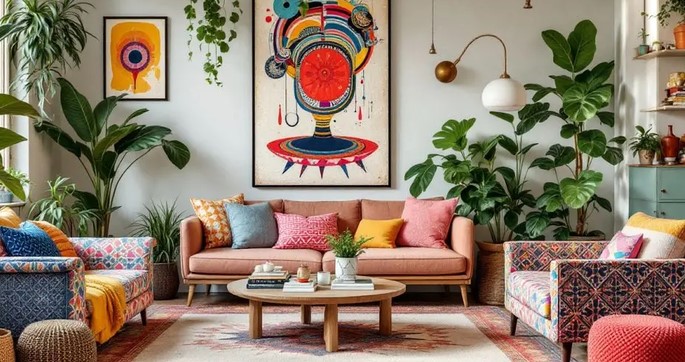
You step into a high-end executive study, expecting the standard, boring sea of matching mahogany furniture and sterile corporate art. Instead, you are instantly captivated by a striking, centuries-old antique writing desk paired with a sleek, ultra-modern ergonomic leather chair, all anchored by a vibrant geometric Turkish rug. The space feels authoritative yet deeply personal, sophisticated yet brimming with character. It communicates success far louder than any cookie-cutter catalog room ever could.
Over my ten-plus years as a home improvement and interior space planner, I have watched hundreds of professionals try to replicate this high-end look in their home offices and corporate spaces, only to fail miserably. They confuse “eclectic” with “random,” throwing disjointed items together until their workspace looks less like an executive environment and more like a chaotic flea market.
Early in my career, I made the exact same mistake during a high-profile home office renovation. I filled the room with beautiful, independent statement pieces, but the moment the client walked in, the room felt visually loud and completely jarring.
That project forced me to master the actual science behind design cohesion. Curating a high-level space requires a strict adherence to structured design principles, and mastering advanced eclectic decor tips is the ultimate shortcut to transforming your work environment into an inspiring visual asset.
The Core Equation: Finding Harmony in Visual Tension
The most common misconception among beginners is that eclectic styling has no rules. In reality, successful eclectic design relies on a delicate balance of visual weight, juxtaposition, and scale.
Think of curating an eclectic room like conducting a world-class symphony orchestra. If every single musician plays a completely different song at maximum volume, you get unmitigated, head-ache-inducing noise. But if you have different instruments playing completely distinct parts that are all held together by a single, steady rhythmic baseline, you create a complex, beautiful masterpiece.
[Random Accumulation] -> No unifying element -> Visual clutter & high anxiety
[Curated Eclectic]    -> Common baseline motif -> Controlled tension & high-end luxury
In an executive office, your “rhythmic baseline” is your unifying element. This is typically a tightly controlled color palette or a repeating structural texture that seamlessly connects your diverse design eras.
Technical Specifications: The 60-30-10 Color Architecture
When implementing advanced eclectic decor tips, your strongest weapon against chaos is color theory. To keep an eclectic room grounded and professional, I always implement a strict 60-30-10 color distribution rule:
1. The 60% Dominant Base (The Anchor)
This is your unifying backdrop, usually your wall paint or primary floor covering. In executive environments, stick to high-end neutral tones with a flat or matte finish, such as charcoal gray, deep navy, or warm alabaster. This clean canvas allows your diverse furniture pieces to stand out without competing with the architecture.
2. The 30% Secondary Layer (The Era Shift)
This portion represents your primary furniture assets, such as your desk, bookshelves, and major seating elements. This is where you introduce the contrast between different design eras—for example, pairing a rustic, live-edge oak desk with mid-century modern walnut cabinetry.
3. The 10% Accent Punch (The Eclectic Spark)
This is reserved for your curated artwork, statement lighting, and accessories. This is where you can break the rules entirely, introducing a bright pop of polished brass, a bold piece of contemporary abstract art, or an exotic textile cushion.
Strategic Implementation Guidelines for Beginners and Intermediates
To elevate your environment from an amateur experiment to a professional showcase, follow this field-tested execution protocol:
-
Establish a Singular Focal Point: Every executive space needs a primary anchor. Make your desk or a massive architectural bookcase the absolute hero of the room, and pull all other eclectic elements around it.
-
Juxtapose Materials, Not Just Eras: True sophistication lives in the textures. Pair smooth, high-gloss metals with rough, open-grain woods. Contrast matte leather upholstery with high-shine lacquer finishes.
-
Maintain Consistent Scale and Proportion: You can easily mix a Victorian armchair with a minimalist glass coffee table, provided their seat heights and overall visual masses match. If one piece looks like a giant next to a tiny toy, the illusion breaks instantly.
💡 Pro Tip: The Three-Times Repetition Rule
If you introduce an odd, highly eccentric piece into your room—such as a polished chrome industrial floor lamp—it will look like an accidental mistake if it sits alone. To make it intentional, repeat that specific material or finish at least three times throughout the space at different heights. Pair the lamp with a small silver frame on your desk and a metallic element in your artwork. This creates a subtle visual path that guides the human eye through the room.
The Substrate and Lighting Blindspot
Here is an expert warning from a contractor who has had to repaint several office layouts: never underestimate the power of your lighting temperature.
Because eclectic spaces combine vastly different wood species and fabric pigments, standard cheap LED bulbs can completely ruin the space. A cool-white bulb (5000K) will make your vintage mahogany desk look pale and sickly, while making your modern glass elements look freezing cold.
Always select dimmable, high-CRI (Color Rendering Index) LED bulbs with a warm-neutral profile of 2700K to 3000K. This color temperature mimics natural late-afternoon sunlight, softening the visual boundaries between different eras and beautifully binding your eclectic assets together.
Cultivating Your Personal Executive Legacy
At the end of the day, home improvement is about maximizing both the utility and the emotional resonance of your surroundings. Curating an executive space using professional eclectic decor tips allows you to break free from rigid design dogma. It gives you the freedom to build a space that honors your past, reflects your current success, and inspires your future focus.
Are you ready to banish boardroom boredom and inject true personality into your workspace this weekend? What unique heirloom or bold statement piece are you currently trying to integrate into your home layout? Drop your thoughts, questions, and design challenges in the comments below—let’s build your perfect environment together!