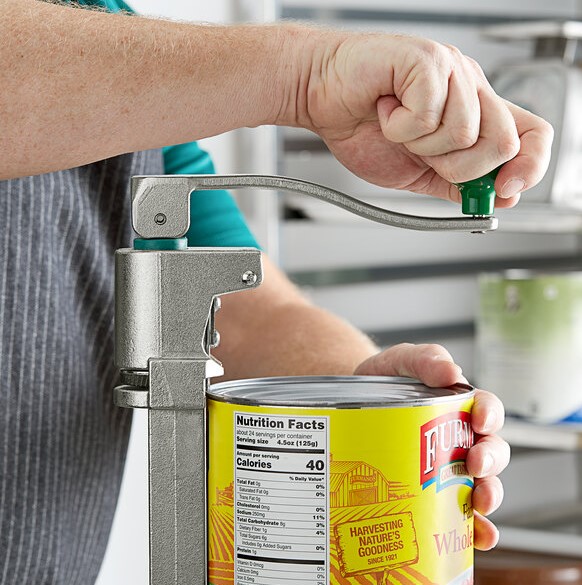
Imagine a massive storm knocks out the power grid in your neighborhood for three days straight. Your smart home assistant goes dark, the electric range is completely useless, and the digital appliances in your kitchen are nothing more than shiny ornaments. You head to the pantry, pull out a high-grade can of emergency rations, and reach for your sleek, motorized electric countertop opener—only to realize it is completely dead.
Over my ten-plus years outfitting both residential kitchens and remote job-site cabins, I have watched thousands of homeowners fall into the trap of over-automating their spaces. They substitute simple, robust mechanical efficiency with complex digital circuitry that fails the moment the grid fluctuates.
When I design highly resilient kitchen workstations, I always bring my clients back to one foundational truth: your home infrastructure is only as dependable as its unpowered redundancies.
That is why a heavy-duty, industrial-grade can opener manual configuration remains an absolutely non-negotiable tool for any high-performance culinary setup. Let’s pull back the curtain on the underlying mechanical physics, metallurgy, and operational maintenance required to keep this classic tool running with flawless reliability.
The Physics of Leverage: How Manual Cutting Systems Defy Friction
To appreciate why a premium manual system outlasts its electric counterparts, we have to look at basic mechanical engineering principles. A mechanical tool does not require an electrical current because it relies entirely on a highly optimized system of force multipliers.
Think of a pro-grade manual opener like a miniaturized industrial metal lathe. Instead of spinning a massive piece of steel using a motor, you are using your own hand to drive a mechanical advantage network that effortlessly slices through structural tinplate sheets.
[Hand Crank Rotation] -> Spur Gear Drive System -> Circular Cutting Wheel -> Clean Sheet Separation
When you turn the mechanical thumb crank of a high-quality can opener manual, you actuate a dual-gear drive system. This mechanical linkage drives a high-carbon feed wheel that grips the lip of the container, forcing the micro-honed cutting wheel to pierce the lid. The mechanical advantage ratio allows a regular human hand to exert hundreds of pounds of localized shear pressure on the steel seal with minimal physical effort.
Technical Specifications: The Anatomy of an Unfailing Tool
If you buy a cheap $3 grocery store checkout-line opener, the internal gears will slip and strip the first time you try to open a thick-gauge commercial can. For true industrial performance, you must evaluate the specific structural composition of the tool:
1. High-Carbon Heat-Treated Steel vs. Stamped Iron
The cutting wheel must be constructed from precision-ground, heat-treated high-carbon steel or stainless steel alloys. Stamped iron wheels dull rapidly, causing the tool to skip, jam, and leave dangerous, micro-jagged metal shavings inside your food supply.
2. Gear-Driven vs. Friction-Driven Linkages
-
Friction-Driven Openers: These rely on basic surface tension between the cutting blade and the can lip. They are prone to slipping, frustrating tracking errors, and losing traction mid-cut.
-
Sealed Gear-Driven Openers: These utilize interlocking spur gears machined directly into the handles. This engineering setup ensures synchronized rotation between the drive wheel and the cutting blade, guaranteeing zero slippage on heavy-gauge tin.
3. Safety Smooth-Edge (Side-Cut) Technology
Modern mechanical tool engineering has introduced the side-cut system. Instead of cutting down into the top of the lid, these advanced manual openers cut horizontally through the outer seam. This breaks the factory seal entirely, leaving a perfectly smooth, reusable lid with zero razor-sharp edges.
Step-by-Step Mechanical Optimization Protocol
Even the toughest industrial tools require proper operational techniques to prevent premature mechanical wear. Here is the field checklist I use to maximize operational longevity:
Step 1: Alignment and Piercing Calibration
Open the tool handles fully to disengage the spur gears. Position the drive wheel directly beneath the bottom lip of the rim, then squeeze the handles firmly together. You should hear a distinct, satisfying pop as the cutting wheel clean-pierces the lid plating.
Step 2: Continuous-Velocity Cranking
Turn the mechanical crank in a smooth, clockwise direction with a consistent rotational speed. Avoid jerky, erratic stops and starts, which can unevenly stress the internal gear teeth and create sharp burrs along the cutting path.
Step 3: Cleaning the Mechanical Interface
After each cycle, wipe down the cutting head with a clean microfiber cloth. Even tiny drops of residual acidic tomato juice or brine will corrode the cutting edge over time, degrading the blade’s sharpness.
💡 Pro Tip: The Penetrating Lubricant Reset
If your trusted manual opener starts binding or grinding after years of heavy service, do not throw it away. Submerge the entire mechanical head in a small bowl of food-grade mineral oil for 30 minutes. Once the oil penetrates the internal axle bushings, pull it out, wipe away the excess, and scrub the gear teeth with an old toothbrush. This simple hydraulic reset instantly clears out trapped food debris and metal dust, restoring smooth, factory-level rotation!
The Cross-Contamination Blindspot
Here is an expert warning that most amateur home improvement enthusiasts completely miss: the underside of your cutting wheel is a breeding ground for invisible bio-hazards.
Traditional top-cutting manual openers plunge the blade directly through the lid, dipping the steel wheel right into the liquid inside the can. If you open a can of seafood, give the tool a quick rinse, and then open a can of vegetables the next day, you are actively introducing old bacteria directly into your fresh food supply.
To eliminate this health hazard, prioritize smooth-edge side-cutting tools, or make it a strict home protocol to scrub the cutting assembly with warm soap and a stiff nylon brush after every single deployment.
Hardening Your Kitchen Infrastructure
At the end of the day, home improvement is about building a highly resilient, reliable environment that can withstand any external scenario. A premium can opener manual configuration isn’t an outdated relic of the past; it is a vital masterwork of mechanical engineering that provides absolute operational security. By choosing heavy-duty materials and maintaining the internal gears, you ensure your household remains functional, prepared, and ready for anything.
Are you ready to audit your kitchen drawers and swap out fragile, electronic components for robust mechanical tools that never fail? What specific style of manual opener have you been relying on in your home setup? Let me know your thoughts and tactical experiences in the comments below—let’s keep your kitchen bulletproof!