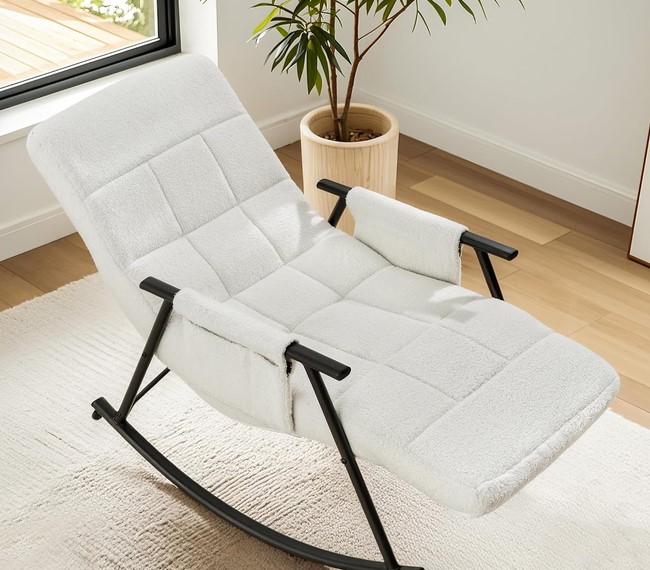
It is 2:00 AM, and you are pacing back and forth on a cold hardwood floor, cradling a fussy infant who refuses to drift off to sleep. Your lower back is throbbing from hours of poor posture, your shoulders are locked in a tense shrug, and the stiff, rigid armchair in the corner looks more like a medieval torture device than a place of rest.
Over my ten-plus years as a home improvement and interior space planner, I have noticed that people meticulously calculate the ergonomics of their corporate office chairs, yet completely ignore the most hard-working seat in the entire residential layout: the one in the baby’s room.
When my first child was born, I made the classic rookie home improvement mistake. I focused entirely on the visual aesthetics of the room, picking out a stunning, mid-century modern accent piece that matched the curtains perfectly but offered zero lumbar support.
After three weeks of sleep deprivation and agonizing neck strains, I dragged that chair to the curb and engineered a proper solution. Upgrading to a technically sound nursery rocking chair transformed our nightly routine from a physical endurance test into a deeply therapeutic experience.
Here is the deep-dive ergonomic breakdown of how integrating the right kinetic furniture can save your spine, elevate your room’s asset value, and maximize long-term comfort.
The Biomechanics of Motion: Why Rhythmic Swaying Works
To appreciate the design engineering behind a high-performance nursery rocking chair, we have to look at the human body’s response to low-frequency vestibular stimulation. The rhythmic back-and-forth motion isn’t just comforting to a newborn baby; it actively lowers the adult occupant’s cortisol levels, reduces muscle tension, and stimulates the parasympathetic nervous system.
Think of an un-ergonomic chair like a rigid, stationary concrete retaining wall. When your body is tired and stressed, it absorbs every ounce of gravity and resistance directly into the intervertebral discs.
[Rigid Accent Chair]   -> Static Lumbar Load -> Muscle Spasms & Back Fatigue
[Ergonomic Rocker]     -> Kinetic Load Distribution -> Dynamic Support -> Spinal Decompression
An engineered rocking chair acts more like a high-performance vehicle suspension system. By allowing for continuous, fluid micro-movements, the chair dynamically redistributes your center of gravity, taking the continuous load off your lower lumbar region and distributing it evenly across the skeletal frame.
Technical Specifications: The Anatomy of an Ergonomic Rocker
When you are sourcing a nursery rocking chair, you need to look past the fabric color and evaluate the structural framework and mechanical engineering. A premium piece of kinetic furniture requires precise dimensional metrics to ensure long-term physical sustainability.
1. The Critical Lumbar Angle and Seat Depth
The seat pan must feature a slight backward pitch (roughly 3 to 5 degrees) to naturally guide your pelvis into the rear lumbar support pad. Look for a seat depth between 18 and 22 inches. If the seat is too deep, the edge will cut off blood circulation behind your knees; if it is too shallow, your thighs won’t receive adequate structural support.
2. Armrest Height and R-Value Arm Contours
When feeding or holding a child, your elbows should rest comfortably at a 90-degree angle without forcing your shoulders to shrug upward. Look for wide, heavily padded armrests that feature dense, high-resiliency foam. This mechanical clearance eliminates carpal tunnel strain and upper thoracic fatigue.
3. Kinetic Foundations: Traditional Bow Rockers vs. Mechanical Gliders
-
Traditional Bow Rockers: These utilize curved wooden skis. They offer a classic, long-amplitude rocking motion that is highly effective for soothing, but they require a larger spatial footprint to avoid scuffing your baseboards.
-
Ball-Bearing Gliders: These operate on a sealed internal mechanical track, moving in a smooth, linear horizontal plane. They take up less physical space and often include a swivel base, making them excellent for tight room layouts.
Materials Matter: Sourcing High-Performance Textiles
Because a nursery environment is highly prone to spills, spit-up, and chemical off-gassing, the material composition of your chair is just as important as its mechanical frame.
-
Performance Weave Fabrics: Look for commercial-grade textiles rated for at least 50,000 double rubs on the Wyzenbeek scale. Fabrics treated with moisture-repellent, stain-resistant technology allow liquid spills to bead up on the surface rather than soaking into the internal foam cushioning.
-
CertiPUR-US and OEKO-TEX Certifications: Ensure the internal polyurethane foam layer is certified free from harmful flame retardants, heavy metals, and formaldehydes to safeguard the indoor air quality of your home.
Step-by-Step Spatial Integration Protocol
Properly positioning your new kinetic furniture within the room layout determines whether it functions as a luxury asset or a frustrating spatial bottleneck. Here is the field checklist I use during interior installations:
Step 1: Calculate the Clearance Envelope
Measure the full displacement arc of the chair. A traditional nursery rocking chair needs at least 12 to 18 inches of clearance from the rear wall and adjacent furniture to prevent structural wall damage during full extension.
Step 2: Establish the Anchor Footprint
If your room features sleek hardwood or laminate flooring, do not place the wooden rockers directly onto the slick surface. Slide a heavy, high-pile area rug underneath the unit. This provides the necessary friction coefficient to prevent the chair from slowly creeping across the floor during use.
Step 3: Align the Kinetic Ottoman
If your rocker features a matching footrest, position the ottoman exactly 14 inches away from the front edge of the seat pan. This distance maintains the ideal ergonomic knee flexion angle when you prop your feet up to decompress your lower back.
💡 Pro Tip: The Invisible Pivot Hazard
If you select a modern glider chair that features a 360-degree swivel mechanism, always check the bottom framework for an integrated travel lock. When your child transitions into a toddler and begins exploring the room independently, locking the swivel and rocking motion prevents tiny fingers and toes from accidentally getting pinched inside the heavy steel undercarriage.
The Long-Term Return on Design Investment
The beauty of a high-quality, ergonomically engineered nursery rocking chair is its incredible longevity beyond the infant years. Unlike plastic changing tables or tiny cribs that outlive their usefulness within 24 months, a well-built structured rocker easily transitions into a primary living space, a home office reading nook, or a master bedroom lounge chair. It is a premium health asset disguised as beautiful residential furniture.
Are you ready to stop sacrificing your spinal health for the sake of standard accent furniture? What kind of layout challenges are you currently facing in your home’s seating zones? Drop your thoughts, questions, and design dilemmas in the comments below—let’s build your perfect comfort zone!