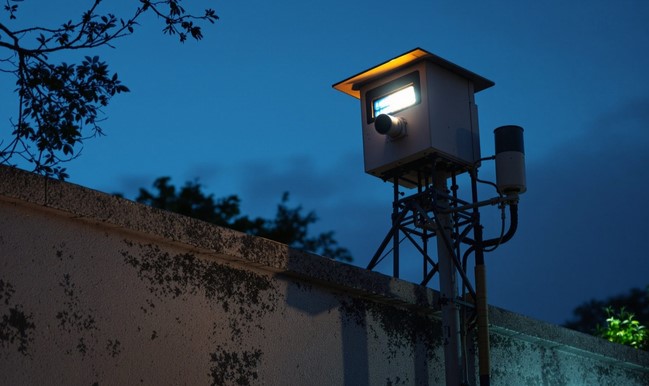
Four years ago, I audited a 5-acre property in rural Texas where the owner had spent over $12,000 on high-definition 4K security cameras pointed directly at his home’s entry doors. Yet, intruders managed to siphon 200 gallons of diesel from his tractor barn near the front entrance without raising a single alert until the morning after. The problem wasn’t his camera resolution; it was his security boundary line—his system waited for threats to reach the house instead of detecting them 600 feet away at the entry gate.
Trenching electrical conduit across hundreds of yards of hard soil to power outdoor sensors used to cost thousands of dollars in heavy machinery rentals. Today, retrofitting your driveway entry with a high-performance solar gate alarm solves this perimeter vulnerability in under two hours without digging a single trench.
Over my 10+ years in structural security and residential retrofitting, I have found that pushed-out perimeter detection is the single most crucial layer for stopping property crimes before they happen.
Beyond the Front Door: Why Perimeter Defense Starts at the Gate Line
Think of your property’s security layout like an airport’s defense zones. You would never place radar scanning stations inside the passenger terminal; you position them miles out at the perimeter to give security personnel time to evaluate and react to incoming aircraft.
A solar gate alarm serves as your property’s long-range radar array. By placing invisible optical or infrared sensors directly at your driveway gate or fence opening, you shift your home’s defense posture from reactive damage control to proactive early warning.
Beyond immediate breach notification, installing a dedicated solar gate alarm delivers three core security benefits:
-
Crucial Early Warning Buffer: Receivers inside your home chime the second a vehicle or trespasser crosses the gate line, giving you 30 to 60 seconds to turn on outdoor floodlights or verify live camera feeds.
-
Complete Off-Grid Autonomy: Built-in solar panels charge internal lithium backup batteries continuously, ensuring uninterrupted 24/7 detection even during severe power grid outages.
-
False Alarm Mitigation: Specialized outdoor dual-beam optics filter out small wildlife, falling leaves, and windblown dust that typically trigger standard motion lights.
+-----------------------------------------------------------------------+
|                    Perimeter Detection Strategy                       |
|                                                                       |
|  [ Traditional Cameras ]  ---> Detects threats at the front door      |
|  [ Solar Gate Alarm ]     ---> Detects threats 500+ feet away at the  |
|                                boundary line, giving reaction time    |
+-----------------------------------------------------------------------+
Technical Mechanics: Photobeams, PIR Sensors, and Solar-Harvesting Physics
Understanding how outdoor detection hardware works prevents you from purchasing cheap toys that scream false alarms every time a squirrel runs past. Modern perimeter hardware relies on two distinct sensing technologies working alongside solar energy harvesting.
Active Infrared Photobeams vs. Passive Infrared (PIR)
-
Active Infrared (AIR) Point-to-Point Beams: Employs a transmitter that shoots multiple invisible pulsed infrared light beams across your gate opening to a matching receiver. An alarm triggers only when an object breaks both beams simultaneously, rendering small animals completely invisible to the sensor.
-
Passive Infrared (PIR) Motion Sensors: Measures ambient thermal radiation (heat signatures) moving across its field of view. While easier to install on a single post, PIR sensors are more susceptible to sudden temperature fluctuations from sun glints or hot exhaust pipes.
Solar Energy Harvesting and RF Transmission
A high-quality solar gate alarm integrates a monocrystalline solar panel coupled with a long-life Lithium Iron Phosphate (LiFePO4) battery. Operating on low-power Sub-1GHz radio frequencies (typically 433MHz or 915MHz), these transmitters push wireless alert signals up to half a mile through heavy timber and walls while drawing mere micro-amps of standby current.
| Sensor Technology | Detection Range | Wildlife Immunity | Installation Complexity | Ideal Application |
| Active Dual-Beam | Up to 300 Feet Across Gate | Exceptional (High Immunity) | Moderate (Requires Alignment) | Driveway Gates, Long Fence Openings |
| Outdoor Dual-PIR | Up to 50 Feet Radius | Moderate | Easy (Single Post Mount) | Narrow Pathways, Side Gates |
| Solar Magnetic Probe | Up to 12 Feet (In-Ground) | Total (Detects Metal Only) | High (Requires Soil Burial) | Vehicle-Only Driveway Monitoring |
Step-by-Step Field Installation: Mounting Your Solar Gate Alarm for Zero False Positives
Installing a perimeter alarm requires precision positioning to guarantee stable optical alignment and solar radiation exposure:
-
Select Sturdy Mounting Posts: Mount your transmitter and receiver units to rigid, non-swaying wooden posts, metal fence pipes, or masonry pillars. Never anchor optical sensors to flexible chain-link fencing that sways violently in high winds.
-
Calibrate Vertical Height for Vehicle and Human Traffic: Position active photobeam sensors between 24 and 30 inches off the ground level. This height allows rabbits and domestic pets to pass beneath the lower beam while instantly catching car bumpers and human torsos.
-
Orient Solar Panels for Maximum Solar Insolation: Angle the integrated photovoltaic panel toward true South (if you live in the Northern Hemisphere) at an angle roughly matching your geographic latitude plus 15 degrees for optimized winter sun capture.
-
Perform Sight-Line Alignment and Walk Testing: Use built-in alignment LED indicators or optical viewfinders to point the transmitter directly into the receiver lens. Conduct walk-tests and vehicle drive-throughs to verify chime activation inside the home.
Pro Tips for All-Weather Reliability and Signal Penetration
Over a decade of setting up outdoor security systems across tough climate zones, I have established strict rules for bulletproof reliability:
Pro Tip: Apply a thin layer of hydrophobic glass treatment (like Rain-X) to the optical plastic lenses of your photobeams twice a year. This prevents heavy morning dew droplets and frost buildup from refracting the infrared beam and triggering false alarms at sunrise.
Always test wireless receiver signal strength inside your home during heavy rain or snow. High humidity and wet foliage absorb high-frequency radio waves, so choosing a solar gate alarm with an adjustable external antenna ensures signals punch through thick storms.
Hidden Warnings: 3 Critical Pitfalls That Disarm Outdoor Security Systems
Avoid these three frequent field mistakes that lead to missed detections or hardware failure:
-
Warning 1: Direct Optical Saturation at Sunrise and Sunset. Pointing active photobeams directly East-to-West causes blinding solar glare during low sun angles, washing out the optical sensor receiver. Mount beams angled slightly North-South or use sun hoods to shield receiver lenses.
-
Warning 2: Ignoring Seasonal Vegetation Growth. Small tree branches or tall weeds that sit clear of the beam path in winter will grow directly into the line of sight during spring and summer. Maintain a 3-foot clearance corridor around your sensor beam path year-round.
-
Warning 3: Neglecting IP Ingress Protection Ratings. Standard indoor security gear will fail outdoors within weeks. Ensure your solar gate alarm housing carries an IP65 or IP67 weatherproofing rating with rubber gasket seals to stop moisture condensation and spider nests inside internal circuitry.
[ Transmitter Unit ] ==========================> [ Receiver Unit ]
       ||                   (Invisible AIR Beam)        ||
+----------------------------------------------------------------+
|   Keep 3-Foot Clearance Corridor Free of Overhanging Branches   |
+----------------------------------------------------------------+
       ||                                               ||
[ Solar Panel Facing South ]                     [ Ground Clearance: 24"-30" ]
Securing your home shouldn’t mean waiting for an intruder to touch your back door. By extending your security threshold to your outer boundary with a high-performance solar gate alarm, you gain precious early warning seconds, off-grid energy independence, and total awareness over who enters your property.
Are you planning to upgrade your perimeter security or looking for solutions to monitor a long rural driveway? What entry challenges are you currently managing on your property? Drop your questions or project ideas in the comments below!